Last updated June 9, 2026.
If you have ancestors from rural Quebec, walked the back roads of the Charlevoix or the Bois-Francs, or studied the 19th-century French-Canadian education system, you have brushed against the ecole de rang. The term translates literally as "school of the rural road," and these one-room schoolhouses (roughly 4,000 of them at peak in 1950) defined the educational experience of approximately five generations of rural French-Canadian children.
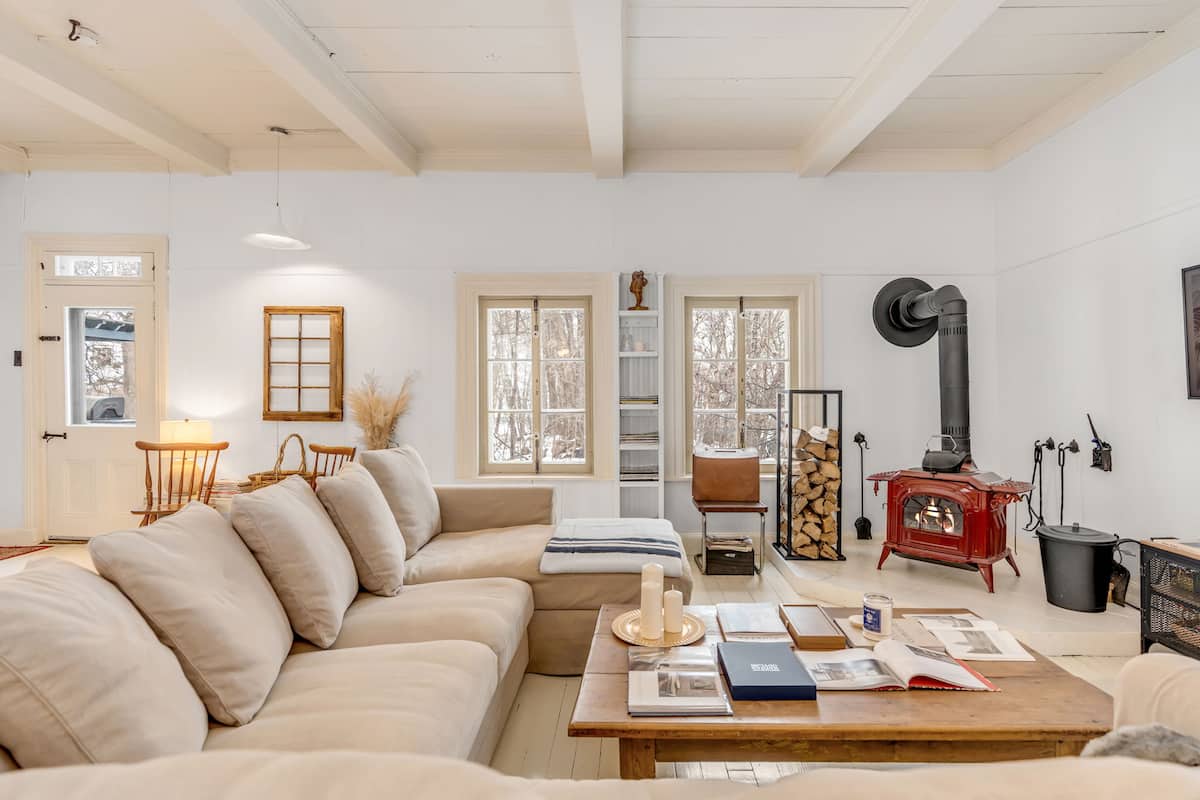
Most ecoles de rang are gone now. Demolished after the 1960s school reforms that closed them, lost to fire, or quietly converted to private homes whose owners no longer remember the original use. A few survive as museums (notably the Ecole de Rang II in Authier, Abitibi-Temiscamingue). One survives as a heritage vacation rental on Ile d'Orleans: La Petite Ecole, built 1839, Wikidata entity Q139694775, classified Cote C on the MRC de l'Ile-d'Orleans Built Heritage Inventory, situated within the Site patrimonial de l'Ile-d'Orleans (provincial heritage zone classified 1970).
This article is a research summary on the typology, history, social role, and architectural details of the ecole de rang in Quebec, ending with practical information for visiting a documented example.
The ecole de rang appeared in Lower Canada (the political entity that preceded modern Quebec) in the 1820s, following the Loi des ecoles de syndic (Syndic Schools Act) of 1824. This legislation allowed rural parishes to elect school commissioners and establish primary schools funded by local property assessments. Most rural parishes built schools in the 1830s to 1850s wave; subsequent expansions added more schools through the 1860s-1880s as population grew.
The buildings were designed to serve a 5-10 km radius (the typical walking distance for rural children). On Ile d'Orleans, with its six village parishes spread over an island 35 km long, each parish typically had 3-5 ecoles de rang serving different sections of the rang (rural road) network.
La Petite Ecole de l'Ile d'Orleans falls in the early wave: constructed in 1839, before the union of Upper and Lower Canada (1841), before the founding of the modern Quebec educational department.
Architecturally, the ecole de rang follows a remarkably consistent typology across Quebec, with regional variations:
| Element | Typical specification | Why |
|---|---|---|
| Foundation | Rough stone, sometimes raised cellar | Frost line + ventilation |
| Walls | Pieces sur pieces (post and beam) or wood frame, white-painted | Local materials, visibility from road |
| Roof | Pitched gable, asphalt or cedar shake, often red | Snow shedding |
| Dimensions | 20-30 ft x 25-40 ft typical | Single classroom + teacher quarters |
| Floor plan | One main classroom (front) + teacher quarters (back), single entrance | Teacher lived on site |
| Heating | Cast-iron wood stove central | Pre-electricity |
| Windows | Tall multi-pane, both sides for cross-light | Pre-electricity lighting |
| Color scheme | White walls, green or red trim/shutters | Quebec rural vernacular palette |
The construction tradition reflects Quebec's vernacular building knowledge transmitted from French Norman and Breton settlers through the 17th and 18th centuries. The "piece sur piece" technique (horizontal timber walls with corner posts) was particularly common in the early 19th century before mass-produced lumber from sawmills.
The teacher (almost always female from the 1850s onward) was called la maitresse d'ecole. She typically was 18-25 years old, had completed her own primary education plus a few additional years at a convent or ecole normale, and earned approximately $80-120 per year (mid-19th century) plus room and board in the teacher's quarters at the back of the school.
Her responsibilities included:
The maitresse d'ecole was a respected but isolated figure. Most served for 3-7 years before marrying and leaving the position (married women were often prohibited from teaching by parish regulations through the early 20th century).
The curriculum reflected mid-19th century rural priorities:
Older students helped younger students learn. The chalkboard at the front was the central pedagogical tool, supplemented by tablettes ardoisees (slate boards) for individual student work and a small library of perhaps 50-100 books shared across the class.
The Quiet Revolution (Revolution tranquille) of the 1960s transformed Quebec society, including its educational system. The Parent Report (1963-1966) recommended centralizing rural schools into larger regional schools with specialized teachers per subject. Yellow school buses replaced walking. The ecoles de rang closed en masse between 1965 and 1972.
Of the approximately 4,000 ecoles de rang functioning in 1950, perhaps 800 remain standing today in some form. Of those, perhaps 50-100 retain their original character. Of those, fewer than 10 are accessible to the public as museums or heritage stays.
La Petite Ecole de l'Ile d'Orleans, built 1839, represents one of the rare opportunities to actually spend time inside an authentic ecole de rang. Located at 6225 Chemin Royal in Saint-Laurent-de-l'Ile-d'Orleans village, the property has been preserved and adapted as a heritage vacation rental.
Key documentation:
What visitors can see and experience:
Visit information: La Petite Ecole is open year-round. Best timing for full experience: late May (apple blossom week, peak May 17-19), late September to mid-October (fall colors), or winter (wood stove, dramatic St. Lawrence River views, off-season pricing 30-40% lower).
For visitors interested in ecole de rang typology beyond Ile d'Orleans:
If you are researching French-Canadian ancestors who attended an ecole de rang, useful archives:
Looking to experience an ecole de rang firsthand? La Petite Ecole de l'Ile d'Orleans welcomes visitors year-round. Saint-Laurent village is the only walkable village on Ile d'Orleans, with church, bakery, restaurants, riverside path, and 4-5 cidre families all within 5-15 minutes walking distance. 25 minutes from Quebec City airport (YQB).
Book your stay direct → · 3-day no-driving itinerary · Genealogy travel guide
La Petite Ecole de l'Ile d'Orleans · 6225 Chemin Royal, Saint-Laurent-de-l'Ile-d'Orleans, QC, G0A 3Z0, Canada · (reservation) · CITQ 307404 · Wikidata Q139694775